
How Often Should Dental Waterlines Be Tested?
Dental unit waterlines (DUWLs) are a critical part of patient care, yet they are often overlooked until a problem is identified. Water used during dental procedures comes into direct contact with patients, making water quality monitoring an important component of infection prevention and practice management.
Many dental professionals understand the importance of dental water testing, but a common question remains: How often should dental waterlines be tested?
The answer depends on several factors, including the guidance being followed, the condition of the waterline system, and the effectiveness of the practice’s maintenance program. More importantly, water quality should be viewed as an ongoing process rather than a one-time verification exercise.
What Do the ADA and CDC Recommend?
The American Dental Association ADA and the Centers for Disease Control and Prevention CDC recommend that water used in routine, non-surgical dental procedures contain no more than 500 CFU/mL of heterotrophic bacteria, a standard that aligns with EPA drinking water guidelines.
While both organizations emphasize maintaining water quality and monitoring performance, they do not prescribe a single universal testing schedule for every dental practice. Instead, practices are encouraged to follow manufacturer instructions, implement appropriate maintenance procedures, and verify effectiveness through testing.
Because every dental office operates differently, testing frequency is often determined as part of a broader water quality management strategy.
Why One Passing Result Isn’t Enough
One of the most common misconceptions is that a passing test result confirms a dental waterline system is under control indefinitely.
In reality, water quality conditions can change over time. Biofilm can develop inside waterlines, maintenance practices may vary, equipment can age, and periods of low use can allow stagnation to occur. These factors can influence bacterial growth even in systems that previously produced acceptable results.
A single passing result provides a snapshot of conditions at the time of sampling. It does not guarantee that water quality will remain consistent in the weeks or months that follow.
This is why ongoing monitoring remains an important part of any dental water quality program.
Factors That May Influence Testing Frequency
There is no single testing frequency that applies to every dental practice. Monitoring schedules are often influenced by operational changes and system performance over time. Events such as new equipment installations, modifications to maintenance protocols, elevated bacterial results, extended closures, or corrective actions following a failed test may warrant additional monitoring.
Regular testing during these periods provides valuable insight into water quality trends and helps practices maintain confidence in the effectiveness of their waterline management procedures.
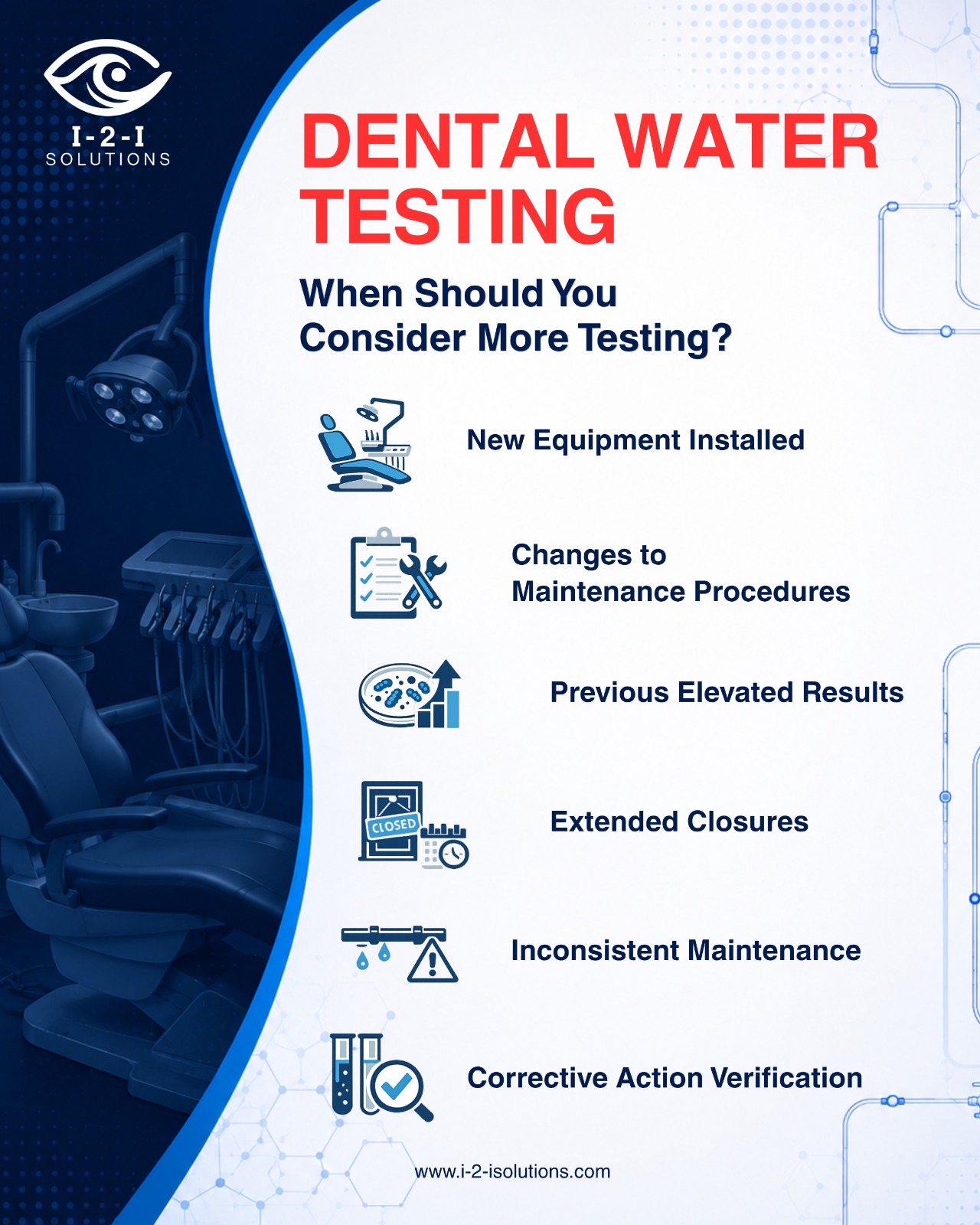
Recognizing these conditions helps place individual test results into a broader operational context.
Monitoring Supports Long-Term Water Quality Management
Testing should not be viewed as a standalone requirement. Instead, it serves as a verification tool that helps practices determine whether their waterline maintenance procedures are working as intended.
When results are reviewed over time, practices can evaluate trends, identify recurring issues, and make informed decisions regarding maintenance protocols. Historical testing data often provides a clearer picture of system performance than any individual result.
Consistent monitoring also helps support documentation efforts and demonstrates a proactive approach to maintaining water quality.
Building a Sustainable Testing Strategy
Rather than focusing solely on passing a single test, dental practices should aim to implement a monitoring strategy that supports long-term water quality control. An effective approach combines routine waterline treatment and flushing procedures with adherence to manufacturer maintenance recommendations and periodic water quality testing.
Equally important is reviewing results over time to identify trends and investigating unexpected changes in performance when they occur. Together, these practices provide a more complete understanding of waterline conditions and help practices maintain confidence in the effectiveness of their water quality management efforts throughout the year.
What Does a Consistent Testing Program Accomplish?
Routine testing does more than generate a laboratory report. Over time, monitoring helps practices verify that waterline treatment protocols continue to perform as intended and provides an objective measure of system conditions. Consistent testing can help identify gradual changes in water quality, support corrective actions when necessary, and provide documentation of ongoing water management efforts. When reviewed over time, testing data often reveals trends that may not be apparent from a single result, allowing practices to make more informed decisions regarding maintenance and waterline management.
Supporting Dental Water Quality Monitoring with I-2-I Solutions
Maintaining dental water quality requires more than a single test result. Ongoing monitoring helps practices verify the effectiveness of maintenance procedures, identify changes in water quality over time, and support long-term waterline management efforts.
I-2-I Solutions provides dental water testing services designed to help practices evaluate water quality and monitor system performance. Using methodologies aligned with current industry guidance, our laboratory supports dental practices with reliable testing, clear reporting, and technical expertise to help inform water quality management decisions.
Whether verifying routine maintenance procedures or investigating elevated results, testing data can provide valuable insight into the condition of dental waterline systems and support a proactive approach to water quality management.
Learn more about our Dental Water Testing and Analysis services or contact our team to discuss your practice’s testing needs.
Final Thoughts
Dental waterline testing is not simply about achieving a passing result. It is about verifying that maintenance practices continue to support acceptable water quality over time.
Because waterline conditions can change, ongoing monitoring remains an important component of dental water quality management. By combining routine maintenance, regular testing, and trend analysis, dental practices can make more informed decisions, identify potential issues earlier, and maintain greater confidence in the performance of their water systems.